- Blog
- How to Import a Car to Norway
How to Import a Car to Norway
If you’d like to import used cars to Norway as a business, this guide will help you understand the documents, taxes, and main steps involved.
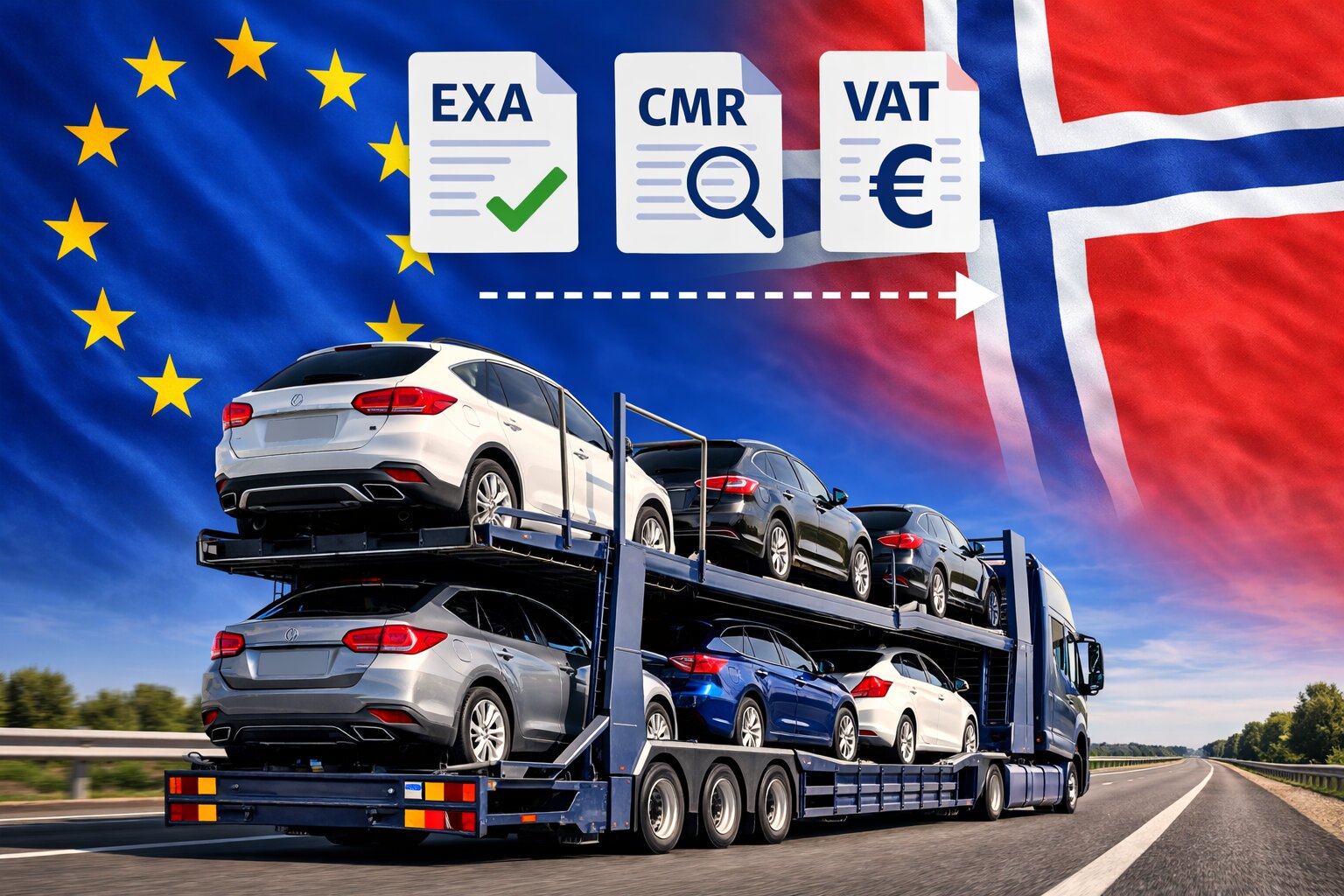
Norway may not be in the EU, but it is closely linked to the European market through the EEA.
For car dealers, this means sourcing used cars from EU countries can be quite accessible, as long as you understand the taxes, customs clearance, and registration steps involved in Norway.
Let’s see the main things to consider when importing used cars to Norway, starting with the documents you’ll need for import.
Documentation for importing a vehicle to Norway as a business
You’ll need the following documents during the import process.
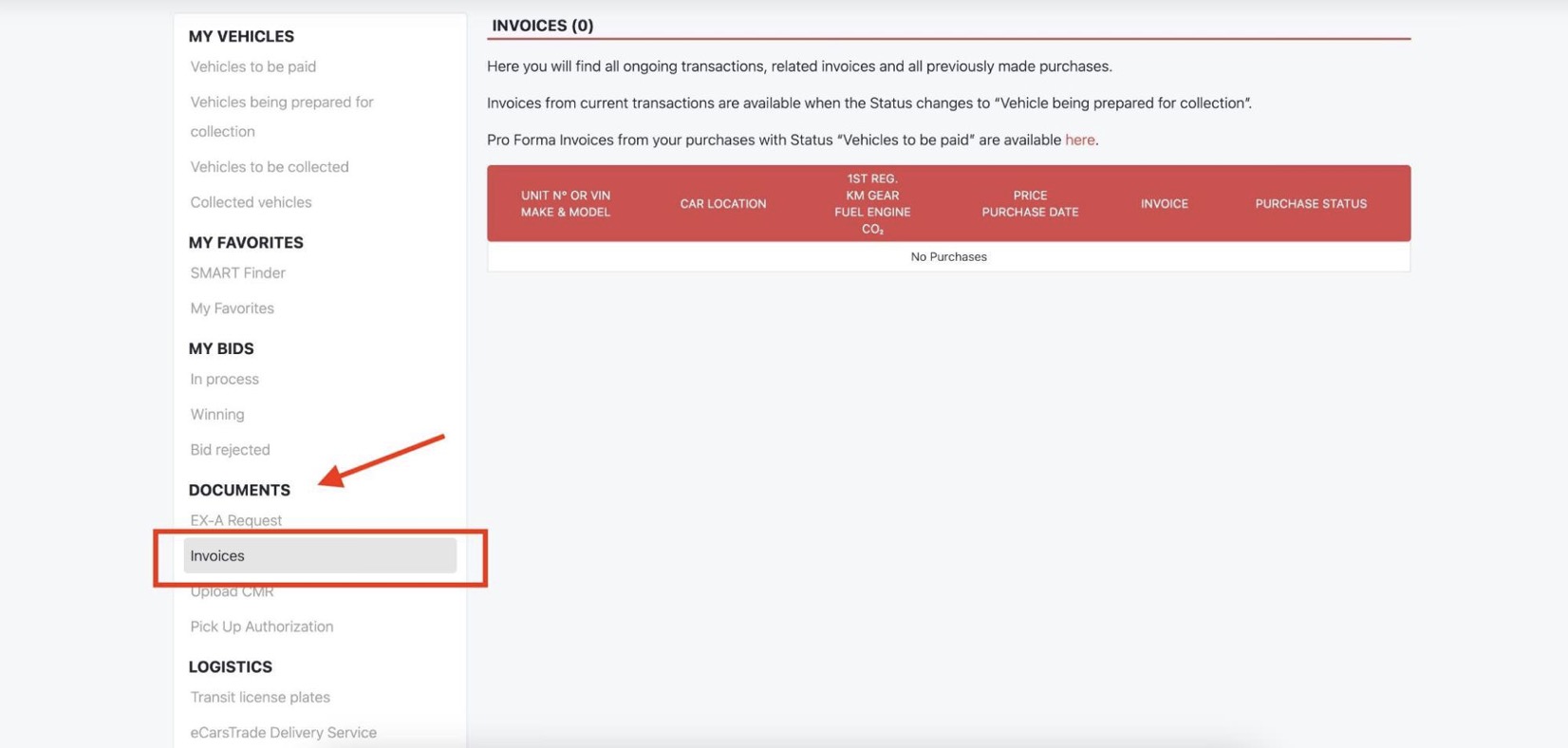
► Vehicle purchase invoice
A vehicle purchase invoice is an official document that confirms the sale of the vehicle and shows the main details of the transaction.
These details include:
- Seller and buyer information
- Vehicle details (including the make, model, and VIN)
- The sale date
- The purchase price
- The VAT scheme used
If you buy a used car through eCarsTrade, you’ll find your invoice on your Personal page.
► Original foreign registration documents
You’ll also need to provide original foreign registration papers.
Buying through eCarsTrade makes this step easier as all vehicles listed on the platform come with their original registration documents.
► Certificate of Conformity (COC)
You may also be asked to provide a Certificate of Conformity (COC) during customs clearance or registration.
It’s not always the main required document for every import, but if the vehicle has a COC, it’s a good idea to keep it ready together with the registration papers.
Keep in mind that most used cars are sold without a COC.
If the car you bought doesn’t have an original COC, you can buy the certificate from providers like EUROCOC or COC Europe.
► Transit document
In some cases, you might also need a transit document or a transit declaration.
You won’t need it if you fully declare the vehicle and pay the VAT at the border when it enters Norway.
But if the vehicle crosses into Norway and continues to another customs office for final customs clearance, the car will move under a transit procedure. In that case, you’ll need a transit document.
You may receive the transit document before arrival, or Norwegian Customs can issue it at the border.
► Export declaration (EX-A)
The EX-A is the export customs document used when a car leaves the EU and goes into a non-EU country.
It is usually arranged by the seller, exporter, or customs agent in the country of origin, not you as a buyer.
This declaration serves as proof that the vehicle has left the EU.
It includes the MRN (Movement Reference Number), which you can use as a reference to track and confirm the export process.
It also has another role: you’ll need the EX-A to claim back the VAT deposit you paid as a non-EU buyer.
Taxes when importing a car to Norway
When importing a car to Norway, there are several taxes you’ll have to pay.
You can use the Norwegian Tax Administration’s calculator to estimate the total cost before you buy a car.
Now, let’s look at each tax separately.
VAT
The first tax you’ll pay is the value-added tax (VAT). The VAT rate is 25% of the vehicle’s customs value.
The customs value is the sum of the following:
- Purchase price
- Freight costs
- Insurance costs to the Norwegian border
Note that electric vehicles follow different VAT rules.
- If the EV’s value is up to NOK 300,000, you don’t pay VAT.
- If the value is higher, you pay 25% VAT only on the amount above NOK 300,000.
This can make many used EVs more affordable to import than ICE cars, especially lower-priced EV models where the taxable amount stays relatively small.
Greenhouse gas tax
If the imported vehicle has air conditioning, you’ll have to pay the greenhouse gas tax.
The amount depends on the type of gas used.
One-off registration tax
The one-off registration tax is usually the biggest tax you’ll pay.
The amount depends on the vehicle’s tax group, vehicle weight, CO2 emissions, and other technical characteristics.
You’ll pay this tax after the Norwegian Public Roads Administration approves the vehicle.
Used imported cars benefit from a deduction for use, which helps lower the tax amount compared to a new vehicle.
There are two ways to calculate the deduction for use:
- Ordinary calculation method: the tax is reduced according to the age of the vehicle. The percentage reduction increases step by step until the vehicle is 20 years old.
- Alternative calculation method: instead of a standard percentage based on the car’s age, the deduction is calculated individually based on the vehicle’s price and odometer reading.
Most dealers will probably use the ordinary method because it’s simpler. Either way, this deduction can make a big difference to the final import cost, so it’s worth checking before you buy.
Scrap deposit tax
The scrap deposit tax is a fixed charge. It’s currently NOK 2,400 for cars, vans, and motorhomes.
You’ll pay this tax at the same time as the one-off registration tax.
Step-by-step process - from purchasing a car to importing it to Norway
Here’s an overview of all the steps you’ll need to take to import a car to Norway.
1. Research and identify potential purchases
The process starts with identifying the needs and preferences of your buyers.
Whether you’re looking for specific fuel types, body types, or price levels, it helps to know what your customers are most likely to buy.
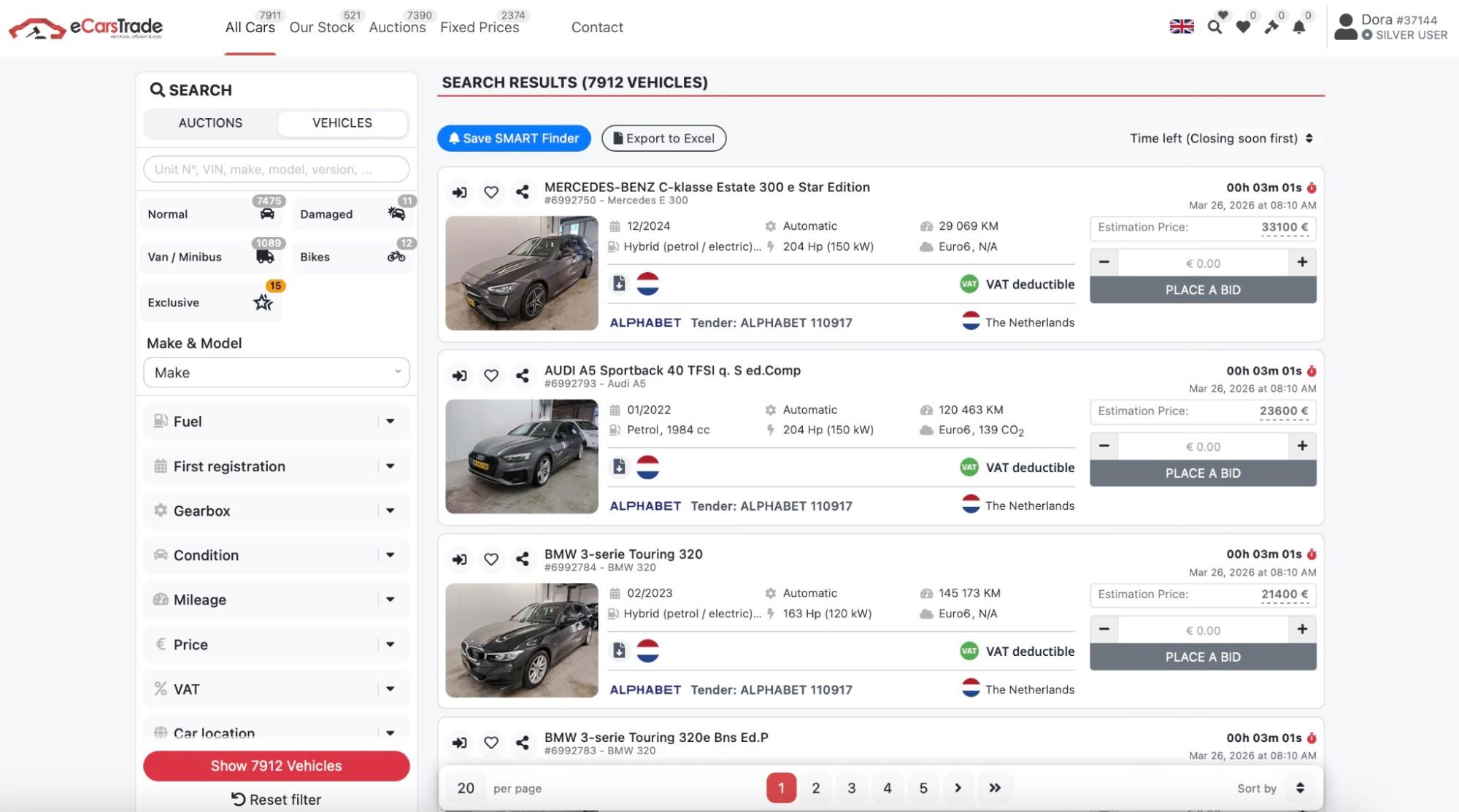
Once you know what you are looking for, you can browse the available vehicles on eCarsTrade.
2. Check with Norwegian Public Roads Administration before buying
Before you buy the car, you first have to check with the Norwegian Public Roads Administration to see if the vehicle can be approved and registered in Norway.
When you have your confirmation, you can place bids on eCarsTrade auctions or buy vehicles at fixed prices.
After you buy and make the payment, you’ll receive your vehicle purchase invoice, and you can then start with the import.
3. Arrange transportation
Next, you should arrange transportation for the vehicle you bought.
The easiest way to transport the vehicle is through eCarsTrade Delivery Service. That way, logistics and paperwork are handled for you.
At this step, you should also determine the EU exit point through which the vehicle will leave the EU, as you’ll need that information to prepare the EX-A export declaration.
4. Request the EX-A declaration
The next step is requesting the EX-A declaration. You can do this in the Documents section of your eCarsTrade profile.
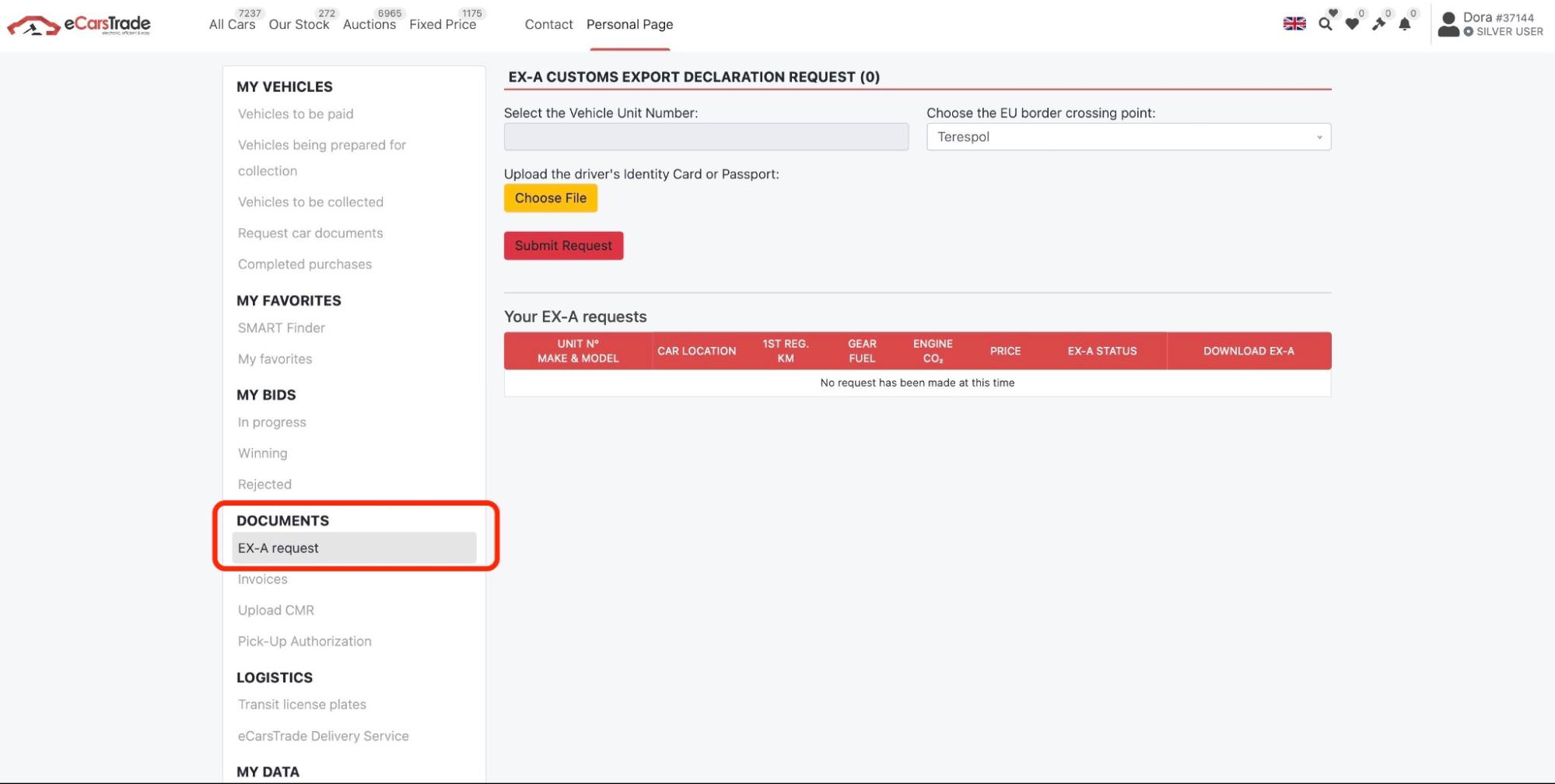
You will then receive your MRN number. You can use it to track the export status of your vehicle.
5. Check the export status
Using your MRN, you’ll check the export status on the MRN Follow-up.
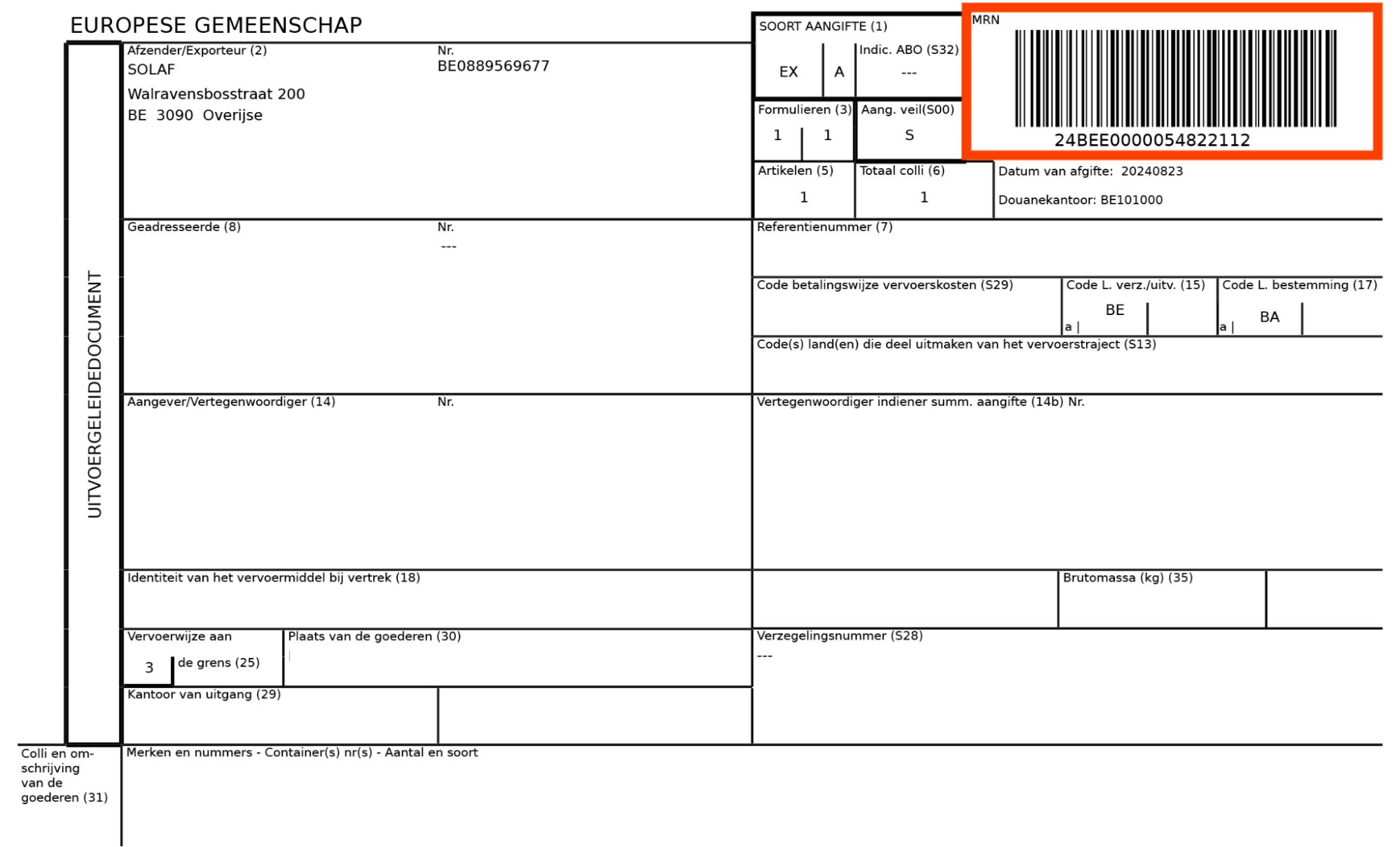
When you see that the vehicle has left the EU on the MRN Follow-up, you can notify your seller to request the VAT refund.
6. Claim VAT refund
As a Norwegian buyer, you paid a deposit when buying the vehicle as a non-EU buyer. The deposit is equal to the VAT in the seller’s country.
For example, if you buy a car in France, the deposit is usually equal to the 20% French VAT charged on that vehicle.
Once the car leaves the EU and the export is properly completed, you can use the EX-A export declaration to claim this deposit back.
eCarsTrade will then send the refund to the same bank account you used to pay for the vehicle.
7. Arrive at the Norwegian border
When the vehicle enters Norway, you need to stop at one of the manned customs offices and declare it.
This applies whether you drive the car into Norway yourself or have it transported there, because the vehicle still needs to go through customs.
If a transit declaration wasn’t issued before, Norwegian Customs can issue it at the border.
You’ll need the declaration if the vehicle continues to another customs office for final customs clearance.
8. Complete customs clearance and pay VAT
If you didn’t pay the VAT and any greenhouse gas tax when crossing the border, you must go to the destination customs office to complete customs clearance.
You usually have to do this within 1 to 3 days.
Bring the following documents:
- Transit declaration
- Vehicle purchase invoice
- Original registration papers
- COC (if you have it)
9. Take the vehicle for approval
You then need to take the vehicle to the Norwegian Public Roads Administration for inspection and approval.
After that, they register the vehicle’s technical data and use it to calculate the remaining taxes.
10. Pay the one-off registration tax
After the vehicle is approved, you need to settle the one-off registration tax. If you don’t have a dealer credit arrangement, you pay it when you register the car.
Dealers who register vehicles for the first time on behalf of customers can apply for credit for the one-off registration tax instead.
This lets you delay the payment, and it also covers the scrap deposit.
To get this arrangement, your business must be registered in the Register of Business Enterprises and provide a bank guarantee.
11. Register the car
To finish, register the vehicle at Norwegian Public Roads Administration.
Get to know the Norwegian used car market
According to OFV, 500,096 used passenger cars were sold in Norway in 2024, which shows that the used car market is large and active.
The biggest difference between the new car market and the used car market is the fuel type.
While almost all new car registrations in 2025 in Norway were electric, the used car market is still led by diesel and petrol cars.
However, the number of EVs on the used market has been growing in recent years. OFV’s 2024 figures show that 107,668 used BEVs sold, which is an increase from 96,483 in 2023.
For used car dealers, this means petrol and diesel cars are still in demand, but it also makes sense to prepare for a growing used EV market.
If you’re not sure which models are worth importing, it helps to look at what sells well in Norway.
Here’s a list of the models that were sold the most in 2024 on the new-car market:
- Tesla Model Y
- Tesla Model 3
- Volvo EX30
- Volkswagen ID.4
- Toyota bZ4X
- Skoda Enyaq
- Nissan Ariya
- Volkswagen ID.3
- Toyota Yaris
- Audi Q4 e-tron
The list of top sellers makes it clear that there’s a preference for EVs, at least in the new market.
Still, it’s best to adjust your buying decisions to your local market and the type of buyers you sell to.
If you want to cover a wider range of demand, it’s good to stock both ICE cars and EVs.
Importing a car to Norway - FAQ
► What taxes will I pay when importing a car to Norway?
When importing a car to Norway, you'll need to pay VAT, greenhouse gas tax, one-off registration tax, and scrap deposit tax.
► Do EVs have any tax reductions?
EVs in Norway benefit from special tax treatment. If the EV is worth up to NOK 300,000, you don’t pay VAT. If it is worth more, you pay VAT only on the part of the value above NOK 300,000.
► Do I need a COC to import a used car to Norway?
Usually no, because the main documents are the purchase invoice and the original registration papers. But if you have a COC, it can be helpful in case customs or registration authorities ask for it.
► Do I need a transit declaration?
You need a transit declaration if the vehicle enters Norway but continues to another customs office for final customs clearance.
If you fully declare the vehicle and pay the VAT at the border, you usually won’t need a transit declaration.
► Can I claim back the VAT deposit I paid as a non-EU buyer?
Yes. Once the car leaves the EU and the export is completed, you can claim it back using the EX-A declaration.
Importar vehículos de Europa puede ser complejo, pero eCarsTrade está aquí para simplificar el proceso. Aprende cómo hacerlo: